Engine Bay Detailing in Johnson County, Kansas
Most vehicle owners never look under the hood until something breaks. The engine bay accumulates years of road dust, oil residue, blown gasket grime, and environmental contaminants that coat every surface.
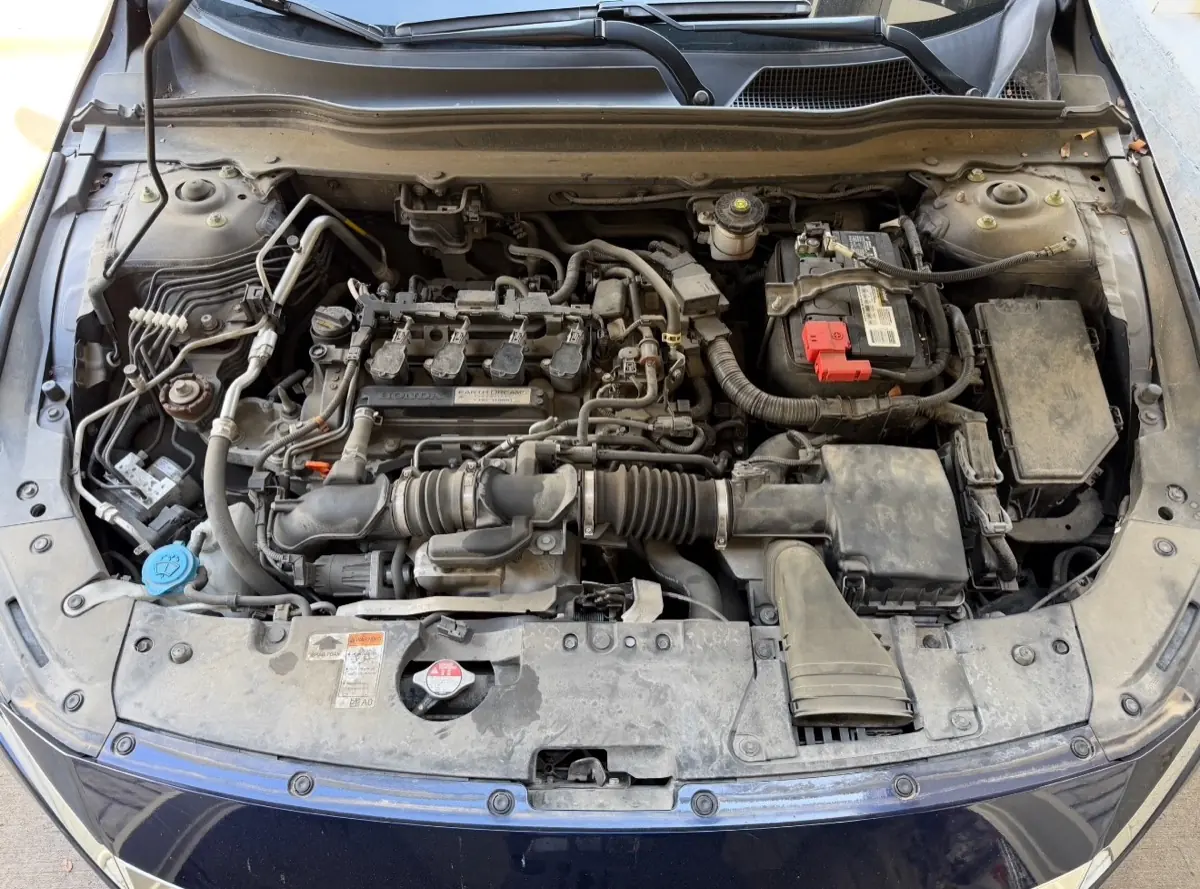
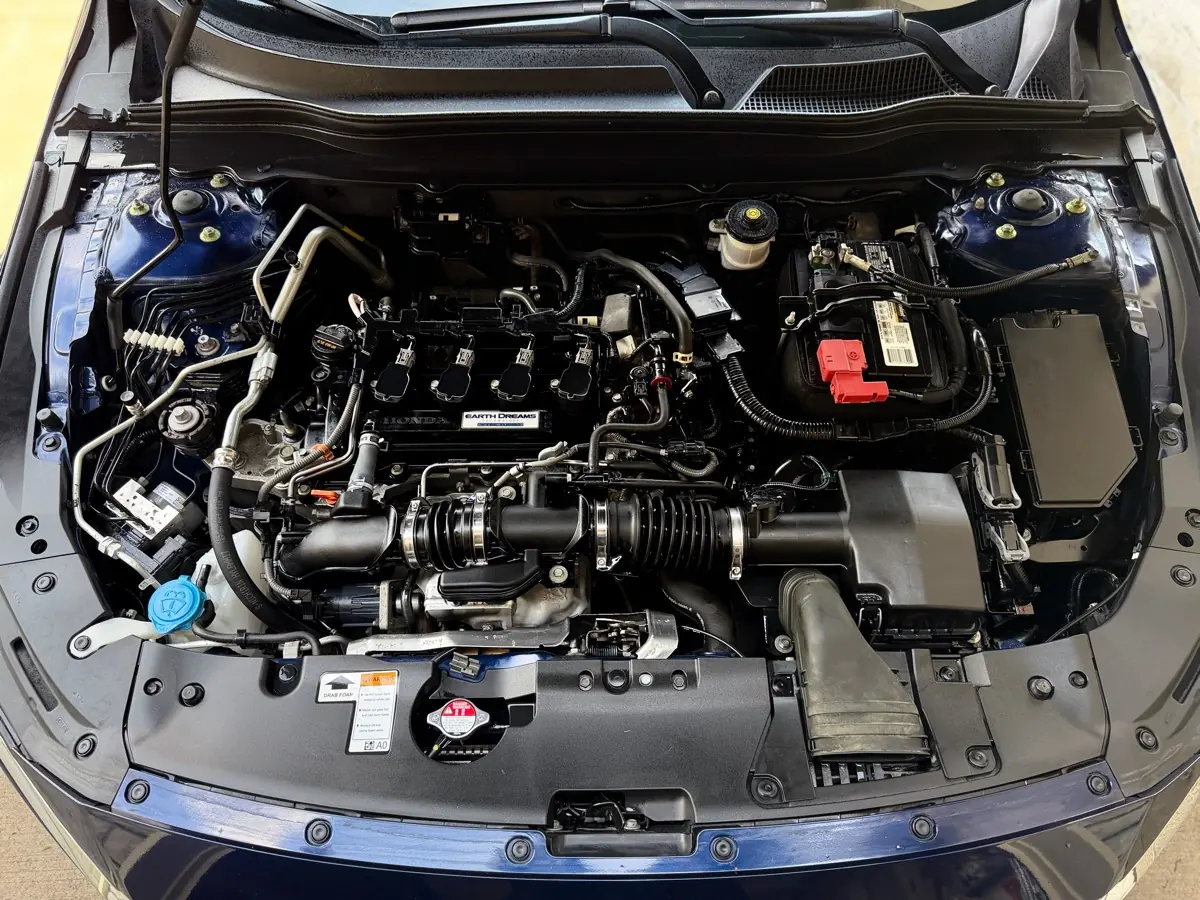
The before/after above is a Honda Accord engine bay, a real vehicle from a real Johnson County customer. The difference is not a filter or editing.
My Engine Bay Detailing Process
Engine bay work is done carefully and methodically to protect sensitive electronics while achieving a deep clean. Every step has a reason, and the order protects the car.
- Assessment and cover-up. Before any degreaser or moisture is introduced, I look for compromised connectors, brittle housings and sensitive sensors, then cover the alternator, fuse box, air intake and exposed connectors. This is the step that separates a safe engine bay detail from an expensive one.
- Dark Fury and targeted degreasers. Dark Fury goes on the heavy grime: valve covers, the underside of the hood, the oil film on plastic covers. Lighter areas get a gentler degreaser matched to the surface, because one strong chemical on everything is how you stain aluminum or dull a plastic cover. I let it dwell three to five minutes so the chemistry breaks down the oil instead of the brush scrubbing at it, and I never let it dry on the surface. On a hot day I work in sections and keep the hood shaded.
- Controlled agitation. Boar hair brushes and detailing brushes work the degreaser into crevices, around hoses, and between components. This is what lifts the black film out of the textured plastic that a rinse alone would leave behind.
- Low-pressure rinse. A gentle, controlled rinse carries the degreaser and loosened grime off. I keep the stream low and angled, never blasting straight down into connectors, and I stay well away from the components in the list below. No pressure washing.
- Blow dry. Compressed air drives the water out of crevices, around connectors, and between tight components. Water left sitting in a connector is what causes the electrical gremlins people blame on engine washing, so nothing gets sealed until the bay is dry.
- Final seal coat. Every plastic cover, all the hoses, rubber parts and non-metal surfaces get a seal coat that restores the deep black, blocks the UV that chalks covers and cracks hoses, and holds that new-engine look on an older car for months instead of days. Dry to the touch, no greasy shine, no dust magnet.
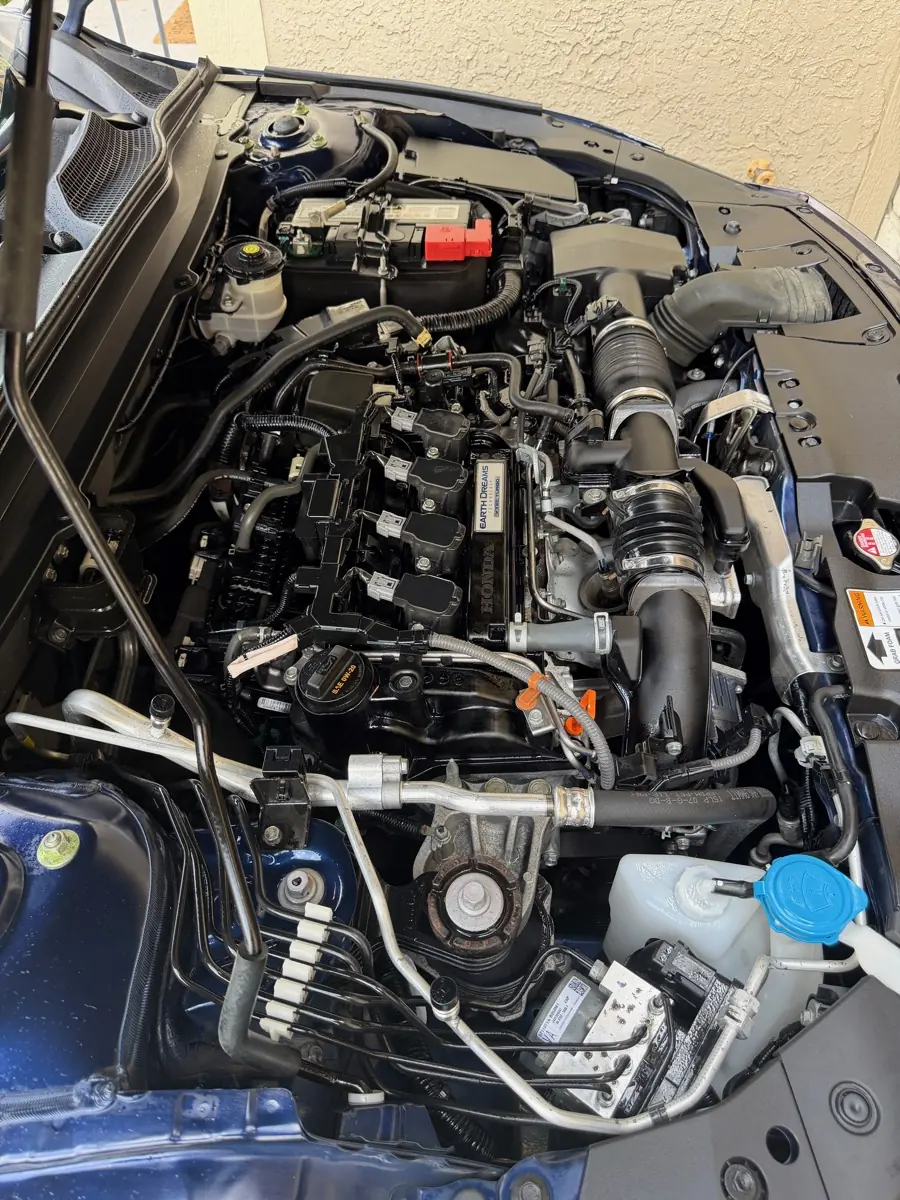
What I Cover and What I Avoid
The difference between a safe engine bay detail and an expensive one is knowing what not to get wet. Before anything is sprayed, I cover or work around these:
- Alternator. It sits low and open on most engines and it does not like water. I cover it and keep the rinse pointed away.
- Fuse box and relay panel. Covered with a bag and tape. Degreaser and moisture in a fuse box is the most common cause of electrical gremlins after a careless engine wash.
- Air intake and filter housing. An open cone filter gets bagged. A sealed airbox gets wiped, not rinsed, and I check the housing for water before I close the hood.
- Exposed connectors, coil packs, and the battery terminals. Wiped by hand with a damp towel and a brush, not sprayed.
- Anything aftermarket or already cracked. If a connector housing is brittle or a cover is missing, I leave that area dry and tell you why.
What does get the full treatment is everything else: plastic engine covers, the underside of the hood, hood struts and hinges, the inner fenders, coolant and washer reservoirs, hoses, the strut towers, and the plastic trim around the bay. That is where the years of dust and oil film actually live.
The Seal Coat
After the bay is blown dry, every plastic and rubber surface gets a final seal coat. Not the greasy silicone spray that looks wet for a week and then collects every speck of dust. The finish I want is factory-fresh black, dry to the touch, with UV protection so the Kansas sun does not chalk the covers or crack the hoses over the summer. It takes about ten minutes to apply and wipe back, it is the step that makes the before and after photos look the way they do, and it is why the bay still looks new the next time you open the hood.
Why Clean Your Engine Bay?
- Spot leaks instantly. A clean engine bay makes any new oil, coolant, or fluid leak immediately visible. On a grimy engine, a small valve cover seep or a weeping coolant line hides under the film until it becomes a large problem. After a clean bay, you or your mechanic can see a fresh drip the first time the hood is opened.
- Resale value. Anyone buying a used vehicle who opens the hood and sees a clean, detailed engine bay immediately perceives the vehicle as better maintained. It signals care, and on a private sale or trade-in it is the cheapest $95 you will spend on the car. Dealers open the hood on every appraisal.
- Preserve plastics and hoses. The UV inhibitors in the seal coat slow the degradation of rubber hoses and plastic covers that Kansas sun and heat accelerate.
- It just looks good. Open the hood at a car meet or in front of a mechanic and get a different reaction entirely.
Engine Bay Detailing Pricing
- Engine Bay Add-On to any service: $95, on an Interior Reset, Exterior Detail, Full Premier Detail, or The Premier Signature
- Full Detail + Engine Bay, Sedan: $445
- Full Detail + Engine Bay, SUV/Truck: $495
Engine Bay Detailing Questions
Is it safe to wash an engine bay?
Yes, engine bay washing is safe when done correctly by a professional. I cover the alternator, fuse box, air intake and exposed connectors before any moisture is introduced, use Dark Fury and other degreasers made for automotive engine bays instead of a household cleaner, and rinse with a controlled, low-pressure stream, never a full pressure wash. Engines are designed to operate in rain and wet conditions. A properly performed engine bay detail is not a risk to your vehicle.
How much does engine bay cleaning cost in Johnson County KS?
Engine bay detailing at Premier Detailing LLC is available as a $95 add-on to any service. As a package, a Full Detail + Engine Bay is $445 for sedans and $495 for SUVs and trucks in Johnson County, Kansas.
How long does an engine bay detail take?
Usually 45 to 90 minutes depending on how dirty the engine bay is. I add it on to any detail appointment.
Book Engine Bay Detail in Johnson County
Add an engine bay detail to any service when booking online, or call/text 913-391-1868 to arrange. It adds 45 to 90 minutes to the appointment depending on how dirty the bay is. I serve Lenexa, Overland Park, Shawnee, Olathe, De Soto, and all of Johnson County, Kansas.
Learn More About Engine Bay Care
Read these guides to understand the benefits of keeping your engine bay clean: