Leather Seat Conditioning in Johnson County, Kansas
Leather car seats are one of the most expensive surfaces in your vehicle and one of the most neglected. Johnson County's climate is particularly hard on automotive leather: summer interior temperatures regularly reach 140 to 160°F in a parked car, UV rays penetrate glass and aggressively fade and dry leather surfaces, and winter temperature swings stress leather fibers repeatedly over its lifetime.
I perform leather cleaning, conditioning and protection as a $95 add-on to any of my services. The product line is the P&S leather care system, the same line used on the presidential limousine. It works in three steps that build on each other: a cleaner that lifts ground-in grime and body oils without stripping the leather, a conditioner that puts back what Kansas heat pulls out, and a UV protectant that stops the sun from taking it again.
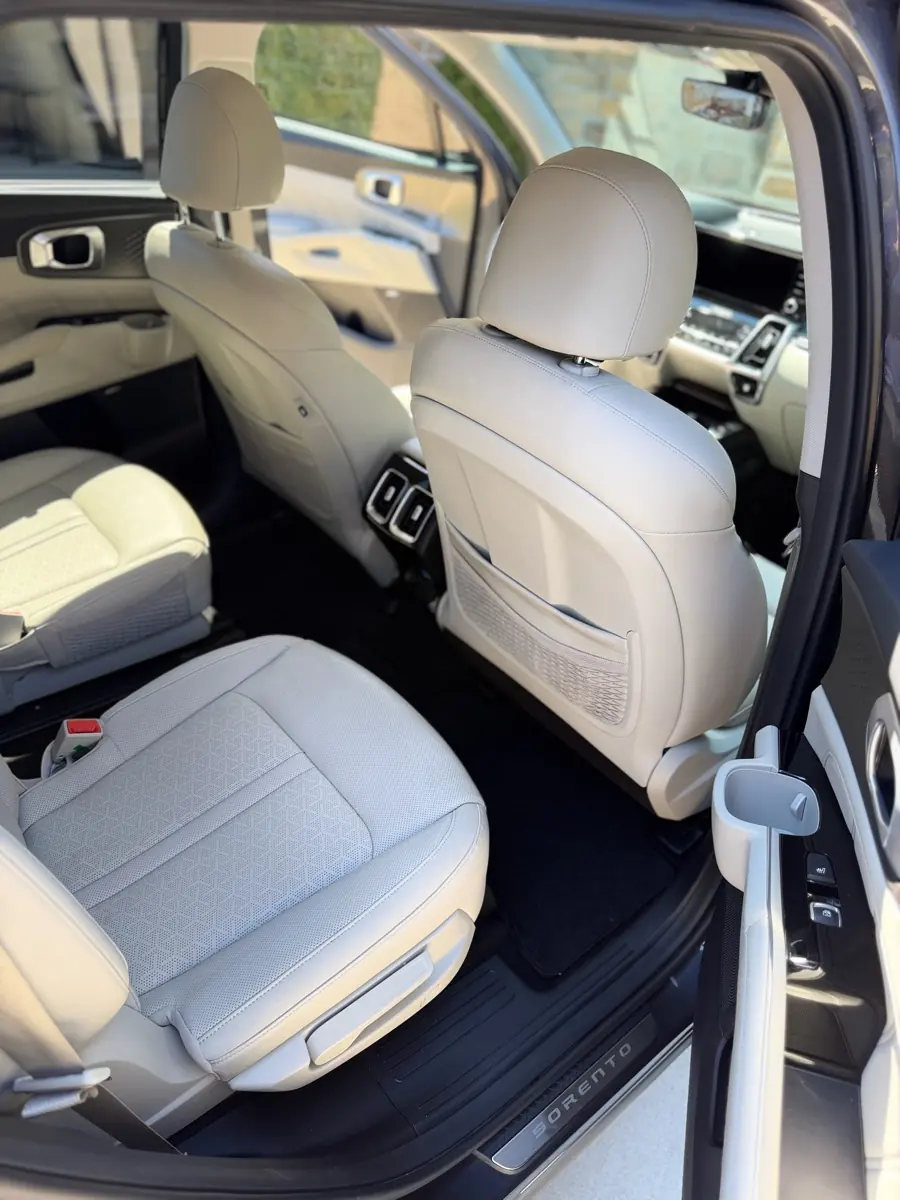
Why Kansas Leather Needs More Attention Than Most States
Kansas is in the top tier of states for UV intensity and temperature extremes. A black leather interior in a parked car in Johnson County in July can reach 180°F.
Conditioning leather every 3 to 4 months in Kansas replenishes the oils that heat depletes, maintains the flexibility that prevents cracking, and keeps UV inhibitors active on the surface. Customers on a quarterly plan who add leather conditioning to each visit have leather that looks and feels newer year over year, not older.
My Leather Conditioning Process
Three products, applied in order, each one doing a job the next one depends on. Conditioner on dirty leather seals the dirt in. Protectant on unconditioned leather sits on a surface that is still drying out underneath. So the order is clean, condition, protect, every time.
- Surface preparation. Loose debris vacuumed from seat surfaces, seams and perforations, then compressed air clears the perforations and seam channels so nothing gets pushed deeper by the next step.
- Steam pre-treatment. A light pass with the McCulloch steamer loosens ground-in oils and opens the surface so the cleaner and conditioner can actually get in instead of sitting on top.
- P&S leather cleaner. The cleaner from the P&S leather care system goes on a soft boar hair brush, never straight onto the seat, and is worked into seams, perforations, headrest creases and bolster edges. It lifts body oils, sunscreen and grime without stripping the leather's own oils, and it comes off with fresh microfiber so the dirt leaves with the towel.
- P&S leather conditioner. Conditioner is massaged in with a microfiber applicator in several thin coats rather than one heavy one. Thin coats penetrate. A heavy coat just sits on the surface and feels greasy. This is what puts flexibility back into leather that heat has dried out, and flexible leather does not crack.
- P&S UV protectant. The last step lays down a dry, matte UV protectant over the conditioned leather. Conditioner keeps leather supple. Protectant is what stops the sun from fading the tops of the seats and drying them out again a week later.
- Buff and finish. Any excess is buffed off so the leather is supple but not slick. It looks factory-correct, not the artificially shiny look of a retail leather wipe.
Coated vs Uncoated Leather
Nearly every factory seat built in the last twenty years is coated leather: dyed hide with a thin clear urethane top coat. That top coat is what you touch, what fades, and what cracks first. On coated leather the job is to keep the top coat clean and flexible and to shield it from UV, because once it splits the hide underneath goes fast.
Uncoated and semi-aniline leather shows up on some higher trims. It feels softer, darkens when it gets wet, and absorbs whatever you put on it, including dye from dark jeans. It needs a gentler cleaner, less water, and a protectant more than a heavy conditioner. I check with a drop of water in a hidden spot before I choose products: beads up means coated, soaks in means it is not.
Perforated Seats, Steering Wheels, and Shifters
Perforated leather, the seats with the small ventilation holes, is where most leather care goes wrong. Product sprayed straight on the seat gets pushed into the holes, dries white, and collects dirt. I apply cleaner and conditioner to the applicator, never the seat, work it thin, and wipe across the perforations instead of into them. Compressed air clears anything that gets into the holes.
The steering wheel is the hardest-worked leather in the car. Sunscreen, hand lotion, and sweat break down the top coat until it goes shiny and slick. It gets the P&S cleaner and a soft brush, then a light coat of the protectant, and almost no conditioner so it never feels greasy in your hands. The shifter, armrests, and door pulls get the same treatment.
UV Protectant
Conditioner keeps leather flexible. It does not stop the sun. The last step on every leather job is the P&S UV protectant, which leaves a dry, matte finish and blocks the light that fades the tops of the seats and the wheel rim. No silicone, no shine. If you have ever slid off a freshly dressed seat, that was silicone, and I do not use it on anything you sit on.
How Often
Every three to four months for a car that lives outside in Johnson County, which is why it lines up with a quarterly plan visit. Twice a year is enough for a garaged car. The tell that you are overdue is the driver's seat bolster: if it feels stiff or looks dull compared to the passenger side, book it.
Leather Conditioning Questions
How often should you condition leather car seats in Kansas?
In Kansas, leather car seats should be conditioned every 3-4 months due to the intense summer UV exposure and heat cycling that dries and stresses leather. Kansas summers can push interior temperatures to 160°F in a parked car, which rapidly depletes natural oils in leather. Every leather treatment at Premier Detailing LLC uses the P&S leather care system to clean the leather, condition it, and lay down a UV protectant that holds for approximately 3-4 months.
Can you repair cracked leather car seats?
Premier Detailing LLC's leather conditioning service can slow and prevent cracking and restore suppleness to leather that is dry but not yet cracked. For leather that has already cracked, I can clean and condition to the best extent possible, which often significantly improves appearance. Deep crack repair is a separate process (filling and recoloring) that I do not currently offer, but maintaining leather with regular conditioning is the most effective way to prevent cracks from forming in the first place.
Is leather conditioning safe for all leather types?
Yes. The P&S leather care line I use is pH-balanced and safe for factory leather, aftermarket leather, and vinyl. It is the same product line used on the presidential limousine. I test a small area first on any unfamiliar material.
Leather Conditioning Pricing
- Leather Protection & Conditioning add-on: $95 with any service
- Interior Reset + Leather, Sedan: $320
- Interior Reset + Leather, SUV/Truck: $370
- Full Premier Detail + Leather, Sedan: $445
Leather Care for Range Rovers, Teslas, and Luxury Vehicles in Johnson County
Overland Park and Leawood residents with Range Rovers, Tesla Model S/X/Y interiors, Denalis, BMWs, and other premium vehicles trust me with their leather care. These vehicles use higher-grade leather, and in some cases synthetic upholstery, that deserves the right chemistry, which is why I test before I start.
Learn More About Leather Care
Read these guides to understand how to protect your leather seats in Kansas heat.